8-Day Kilimanjaro Northern Circuit
Overview of 8-Day Kilimanjaro Northern Circuit
The longest and newest route, offering 360-degree views and the highest acclimatization success of any route.
Highlights of this Tour
Itinerary and Where to Stay
Day 1: Londorossi Gate to Mti Mkubwa
Your journey begins with a drive to the Londorossi Gate on the western side of the mountain. After completing the park formalities and meeting your crew of guides and porters, you’ll take a final short drive to the Lemosho trailhead. The trek starts in a thick, emerald-green rainforest where the air is humid and filled with the sounds of the bush. You’ll spend about three or four hours walking on a winding trail under a heavy canopy of ancient trees and giant ferns. It is a quiet, shaded world where you can often spot colobus monkeys or exotic birds in the high branches. You’ll reach Mti Mkubwa, or "Big Tree" Camp, in the late afternoon, where your tents will already be set up in a small forest clearing. You’ll spend your first night getting used to the sounds of the mountain while the crew prepares a hot dinner.
Meals Day 1: Lunch, Dinner
Destination: Mount Kilimanjaro
Day 2: The Shira Ridge to Shira 1 Camp
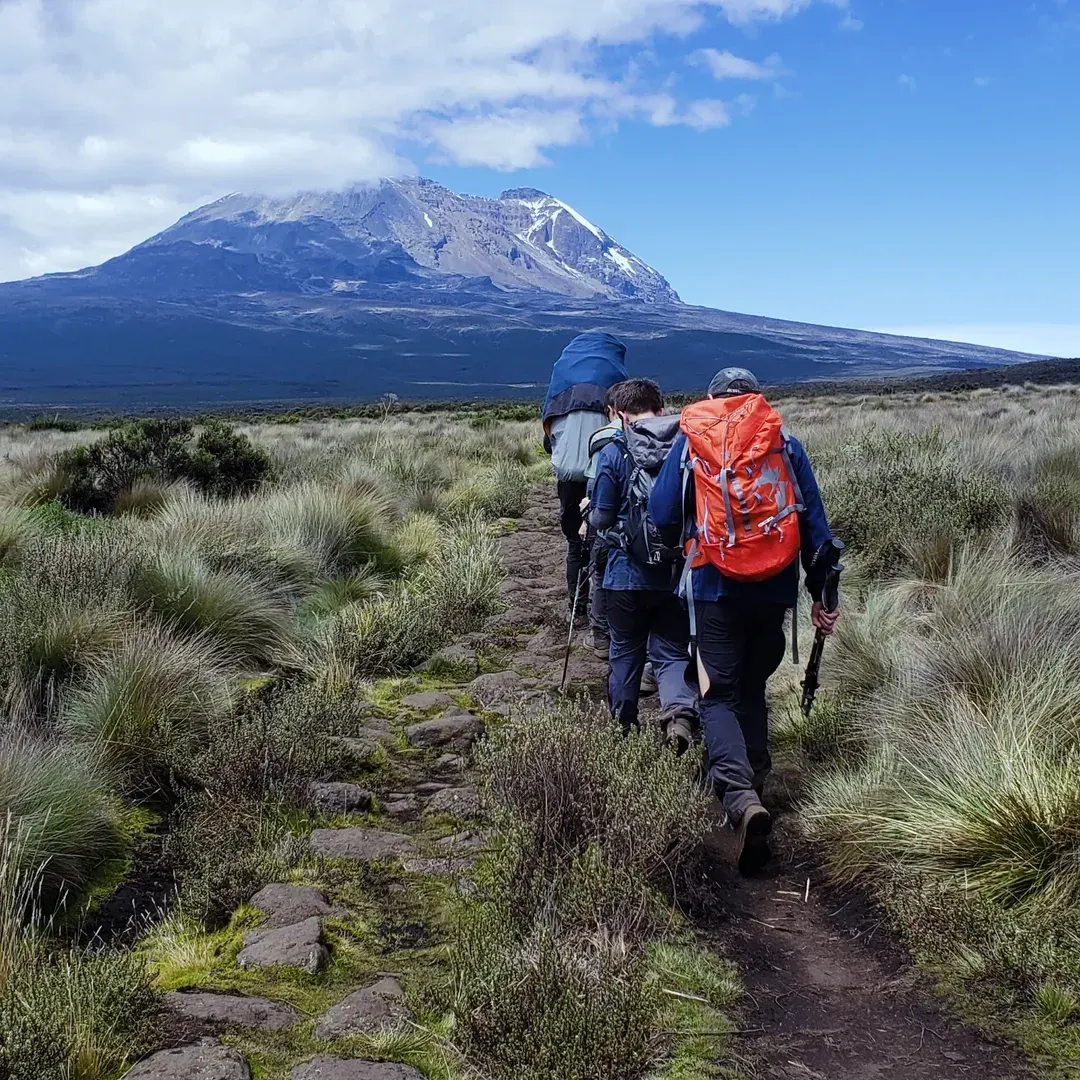
After breakfast, the trail leaves the dense forest behind and begins a steady climb into the moorland zone. The trees become shorter and are replaced by giant heathers and shrubs as you ascend the Shira Ridge. It is a steeper walk than the first day, but as you reach the top of the ridge, the landscape opens up into the vast Shira Plateau. This area was once a volcanic peak that collapsed, and it now offers a massive, flat expanse of high-altitude grassland. You’ll reach Shira 1 Camp in the afternoon, perched on the edge of the plateau. From here, you’ll have your first clear views of the Kibo peak in the distance, watching the light fade over the western clouds as you settle in for your second night.
Meals Day 2: Breakfast, Lunch, Dinner
Destination: Mount Kilimanjaro
Day 3: Across the Shira Plateau to Shira 2 Camp
The third day is a gentle and scenic walk across the plateau toward Shira 2 Camp. This is a relatively easy day of trekking, which is perfect for helping your body adjust to the altitude. You’ll move through a landscape of volcanic rock and unique plants like the giant lobelia, following a trail that offers constant views of the southern ice fields. The walk takes about three or four hours, arriving at camp in time for lunch. Having the afternoon to rest at 3,800 meters is vital for your long-term success on the mountain. You can use the extra time to explore the nearby rock formations or simply sit and take in the scale of the mountain as you move toward the northern side.
Meals Day 3: Breakfast, Lunch, Dinner
Destination: Mount Kilimanjaro
Day 4: Heading North toward Moir Hut
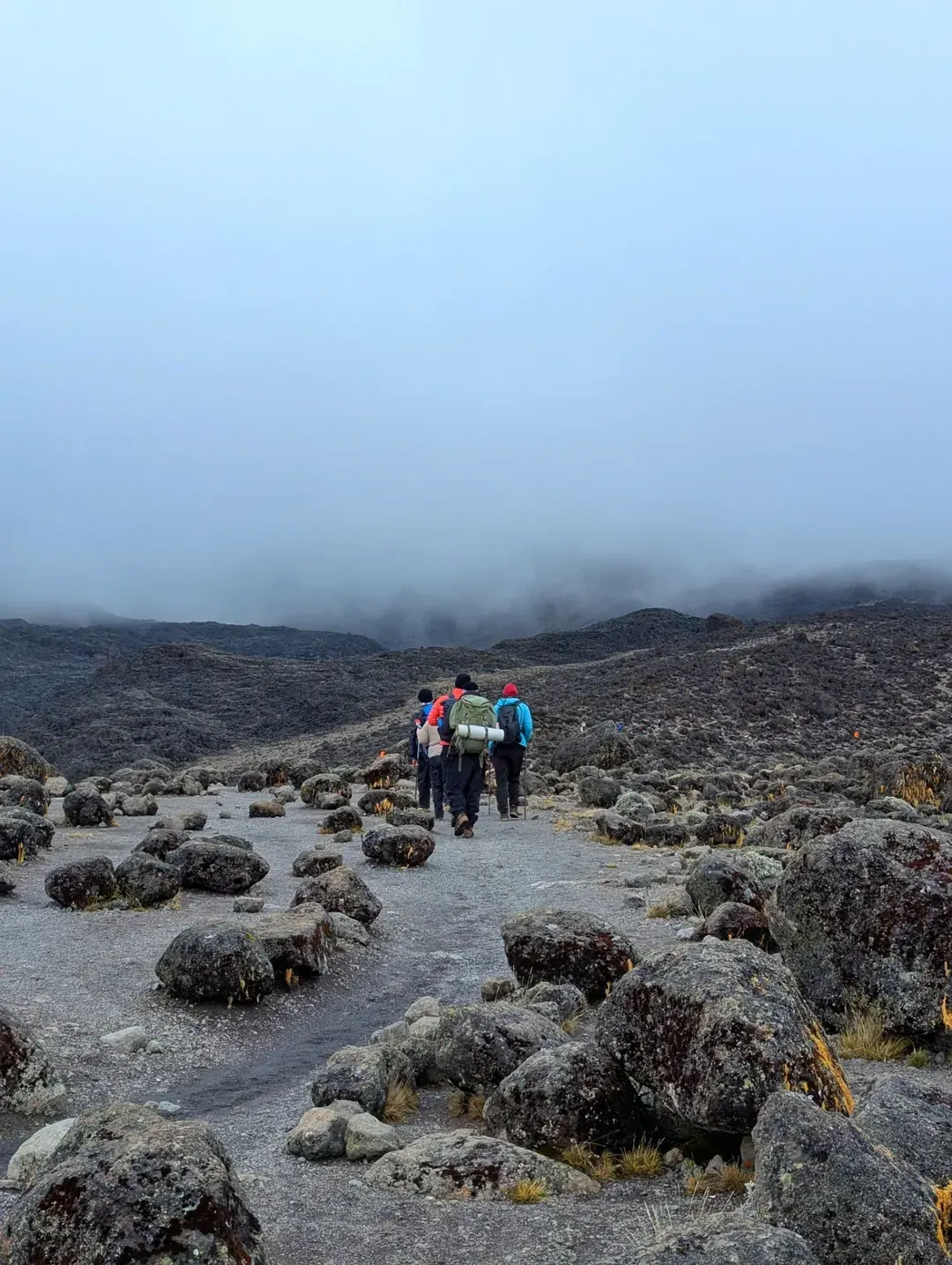
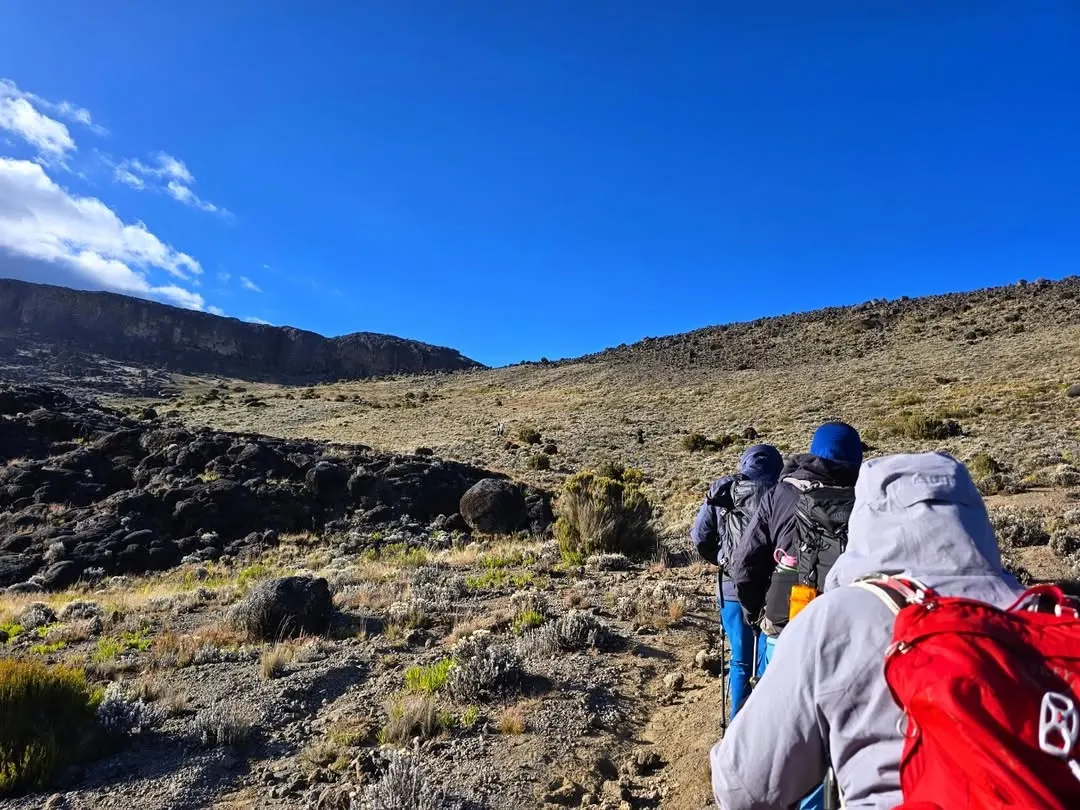
On the fourth day, the trail leaves the more popular western routes and heads toward the remote northern circuit. You’ll trek across the high-altitude desert, moving toward the base of the Lent Hills. This part of the mountain is much quieter, and you’ll likely see very few other hikers. The landscape becomes more barren and rocky as you climb toward Moir Hut, a secluded camp tucked into a small valley. The walk takes about five or six hours, and once you arrive, you can take a short acclimatization walk up into the Lent Hills to get a bit higher before returning to camp for dinner. This "climb high, sleep low" strategy is a key part of why this route is so successful.
Meals Day 4: Breakfast, Lunch, Dinner
Destination: Mount Kilimanjaro
Day 5: The Northern Slopes to Buffalo Camp
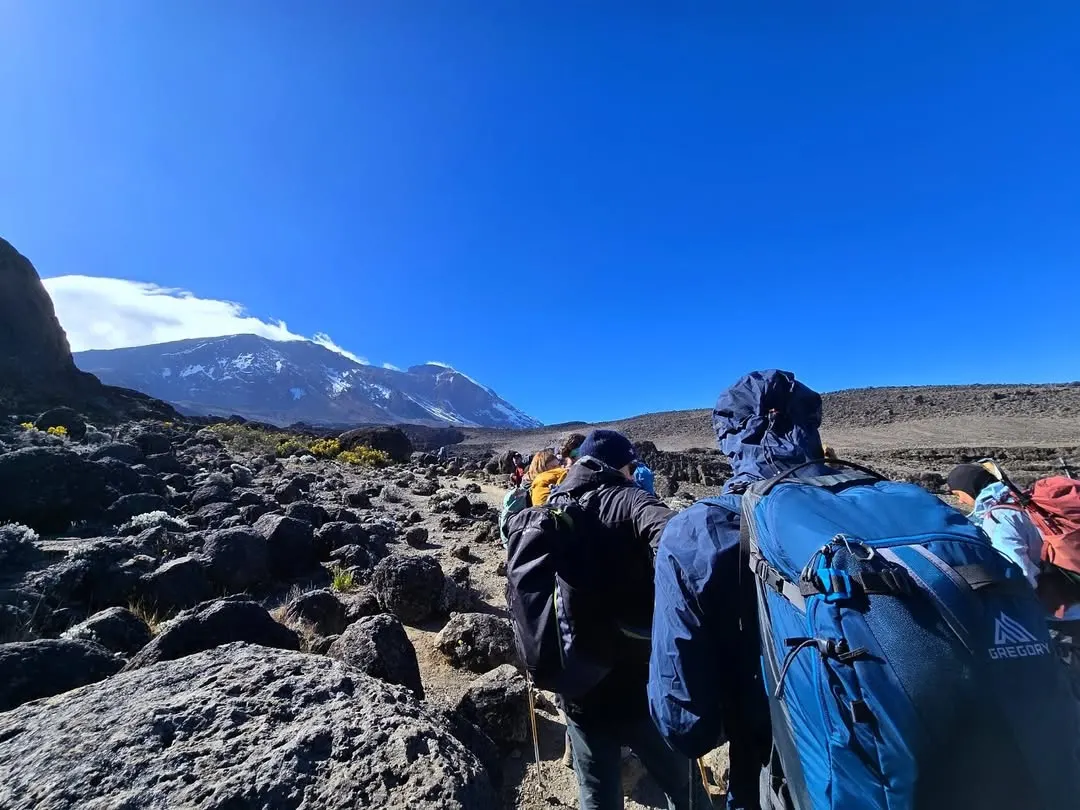
The fifth day is spent trekking along the northern slopes of Kilimanjaro. You’ll move out of the Moir Valley and follow a trail that circles the northern face of the Kibo peak. This is one of the most remote parts of the mountain, offering views of the plains of Kenya stretching out to the north. The terrain is a mix of rocky ridges and small valleys in the alpine desert zone. It is a long day of walking, taking about six or seven hours, but the incline is gradual. You’ll reach Buffalo Camp, also known as Pofu Camp, in the afternoon. The camp offers a sense of total isolation, surrounded by the vastness of the mountain and the silent northern glaciers.
Meals Day 5: Breakfast, Lunch, Dinner
Destination: Mount Kilimanjaro
Day 6: Through the Desert to Third Cave
After breakfast, you’ll continue your journey east across the northern slopes toward the Third Cave area. The trail crosses several small ridges and dry valleys, remaining in the high-altitude desert where very little vegetation can survive. The air is noticeably thinner and colder here, but because you have already spent five days on the mountain, your body should be feeling strong. The walk takes about five or six hours, and you’ll arrive at Third Cave Camp in the late afternoon. This camp is a quiet spot on the northeastern side of the mountain, and you’ll spend the evening resting and hydrating as you prepare for the final approach to the base camp.
Meals Day 6: Breakfast, Lunch, Dinner
Destination: Mount Kilimanjaro
Day 7: Day 7: The Approach to School Hut
The seventh day is a steady climb toward School Hut, which serves as your base camp for the summit push. The trail moves up through the rocky desert, crossing the saddle that sits between the Kibo and Mawenzi peaks. It is a shorter day of walking, about four or five hours, which is designed to give you plenty of time to rest before the summit. You’ll arrive at School Hut in the early afternoon, where you’ll have a high-energy meal and try to get as much sleep as possible. Your guides will wake you up just after midnight to begin the final climb to the roof of Africa, so the focus of the evening is entirely on staying warm and prepared.
Meals Day 7: Breakfast, Lunch, Dinner
Destination: Mount Kilimanjaro
Day 8: The Summit of Uhuru Peak and Final Descent
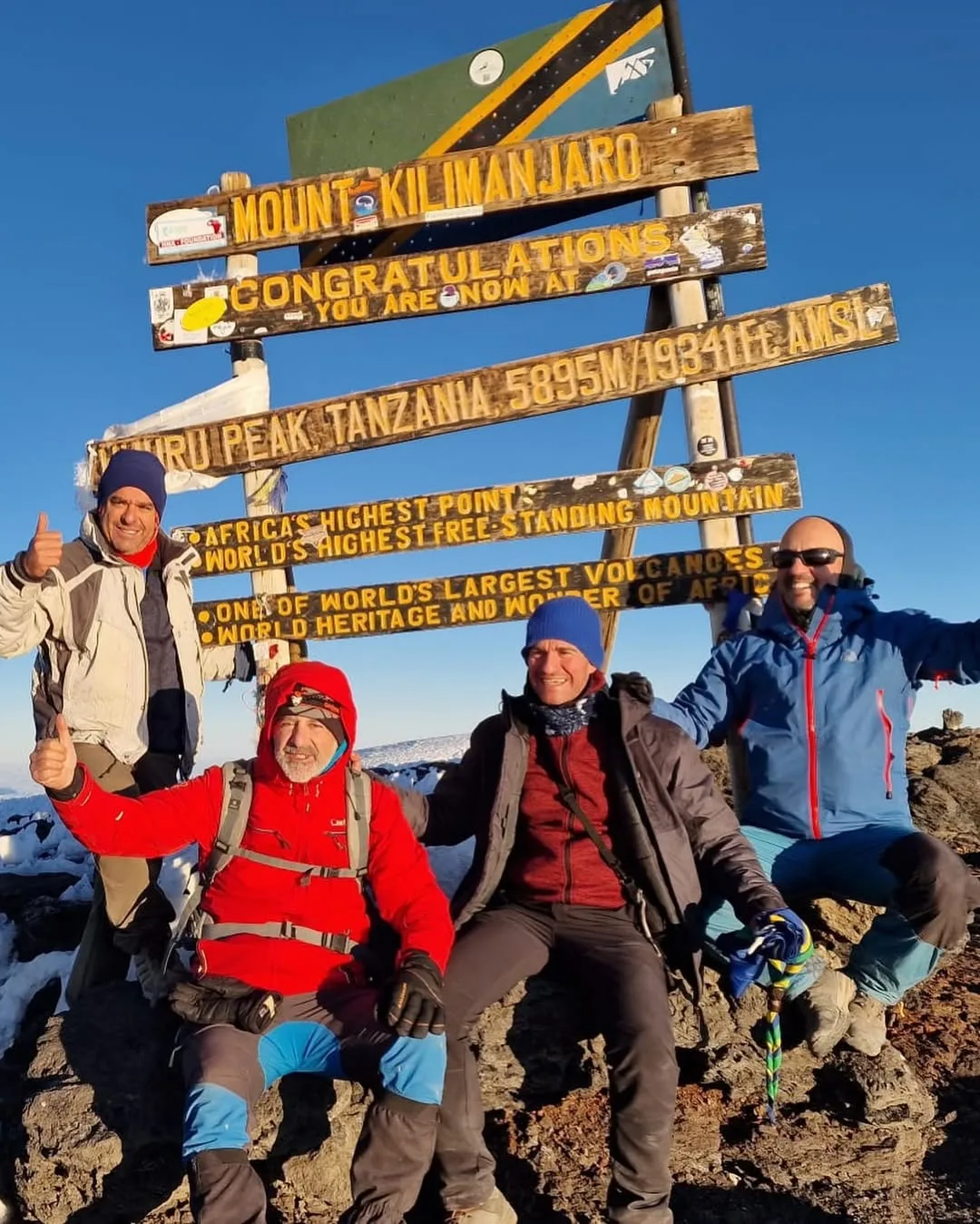
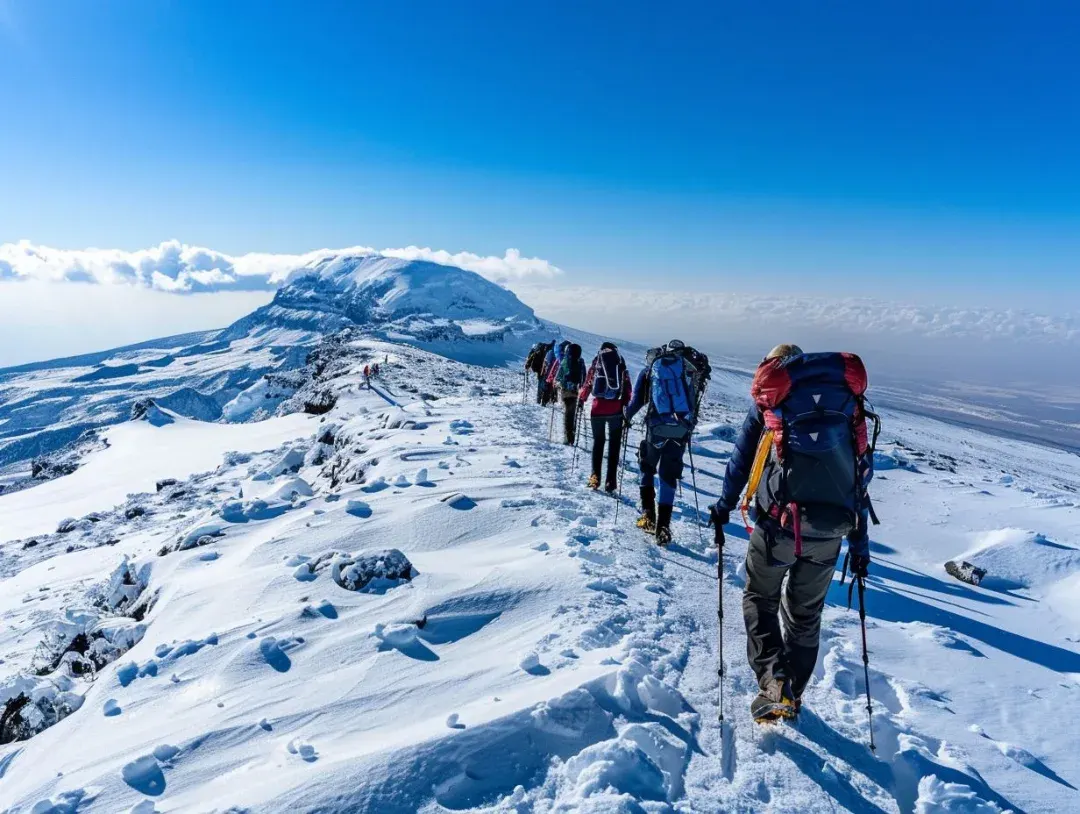
The final climb begins in the dark, moving slowly up the steep scree slopes toward the crater rim. This is the most physically demanding part of the journey, but reaching Stella Point just as the sun begins to rise over the clouds is an incredible reward. From there, it is a final walk along the snowy rim to reach Uhuru Peak, the highest point in Africa. After celebrating at the summit, you’ll begin the long descent back toward the Mweka Gate. You’ll stop for a short rest and a warm meal at one of the lower camps before continuing down through the moorland and into the rainforest. You’ll reach the gate in the late afternoon to receive your certificates and say goodbye to your crew before returning to the city for a hot shower and a well-deserved rest.
Meals Day 8: Breakfast
Destination: Mount Kilimanjaro
What's Included
- Professional guide team
- Private/groupcamping
- All park fees
- Mountain rescue
- All meals.
What's Not Included
- Tips
- Insurance
- Flights.
Places You will Visit
Book This Package
Quick Info
- Duration: 8 Days / 7 Nights
- Difficulty: Moderate
- Starts: Moshi
- Ends: Moshi
The 8-Day Northern Circuit is widely considered the "ultimate" route up Mount Kilimanjaro because it offers the longest and most effective acclimatization profile of any trail. By circling the quiet, remote northern slopes of the mountain, this journey provides a nearly 360-degree view of the landscape while spending more time at high altitudes without the physical strain of steep, daily climbs. It is the newest route on the mountain and remains the least crowded, allowing you to experience the vastness of the alpine desert and the silence of the glaciers in near solitude. Because the trail covers so much ground over eight days, your body has the best possible chance to adjust to the thinning air, leading to a success rate that is higher than any other path to the summit. This is a camping expedition where your support team manages every detail of the camps, letting you focus on the steady rhythm of the climb as you move from the rainforest to the arctic zone of the peak.
Important Information for the Northern Circuit
-
Acclimatization Success: The Northern Circuit is the "Ultimate Success" route because it spends more time in the 3,800m to 4,500m zone than any other trail. This extended time at high altitude allows your body to produce more red blood cells naturally, making the final push to the summit feel much more manageable.
-
Remote Wilderness: Unlike the busier Marangu or Machame routes, the Northern Circuit offers a deep sense of solitude. For several days, you will be on trails that very few people use, giving you a private experience with the mountain's northern glaciers and the vast plains below.
-
Weather and Clothing: You will experience every climate zone, from the humid 25°C forest to the -15°C arctic summit. You need a high-quality down jacket, thermal layers, and a sleeping bag rated for at least -10°C. Sturdy, waterproof hiking boots are essential for the rocky desert terrain.
-
The Crew and Logistics: Your mountain crew of guides, porters, and a cook will handle all the heavy lifting and camp setup. They carry the food, tents, and water, leaving you to carry only a small daypack. It is customary to offer a tip to the team on the final day as a thank you for their hard work over the eight-day journey.
-
Physical Preparation: While the Northern Circuit has a high success rate, it is still a long and demanding trek. You will be walking for several hours each day on uneven ground. Being in good cardiovascular shape and having comfortable, broken-in boots will make the experience much more enjoyable.