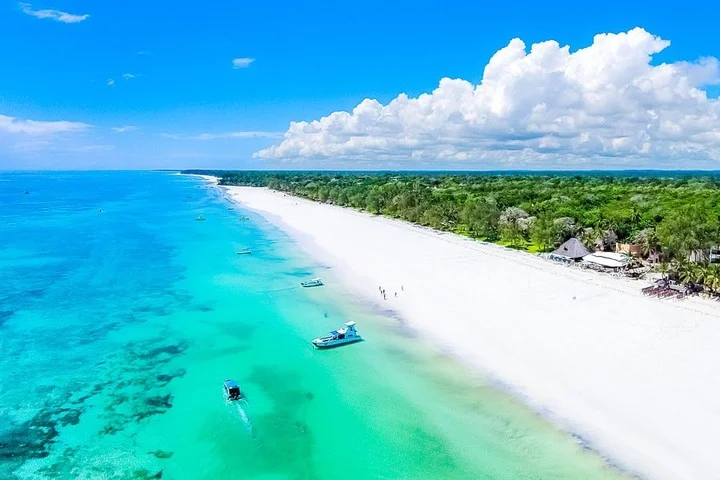
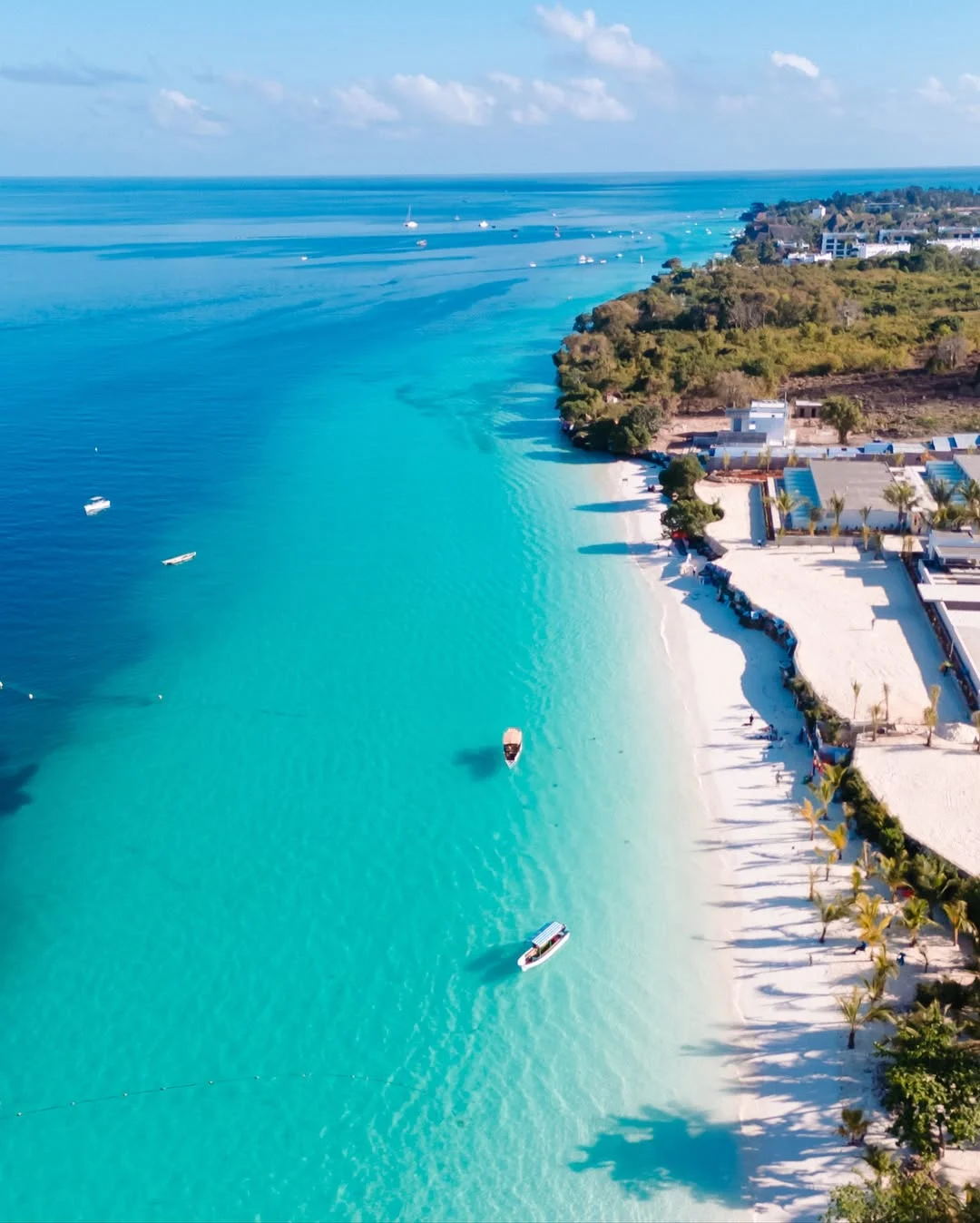
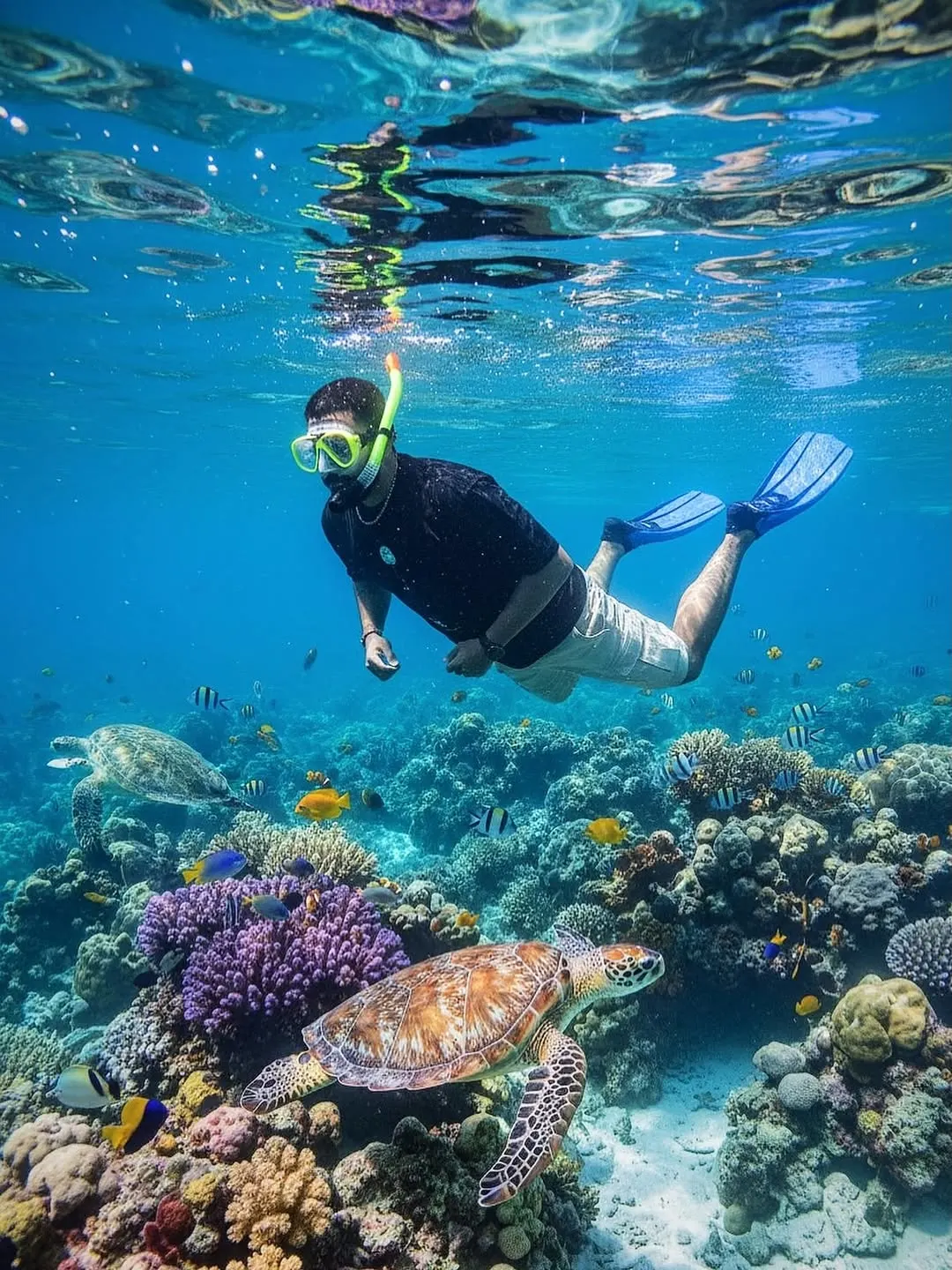
Kisite coral reefs
Shallow reefs around Kisite Island hold tropical fish, rays and hard coral gardens.
We add Kisite-Mpunguti Marine National Park to private trips planned around your dates.
Free quote, no obligation. We reply within 24 hours.
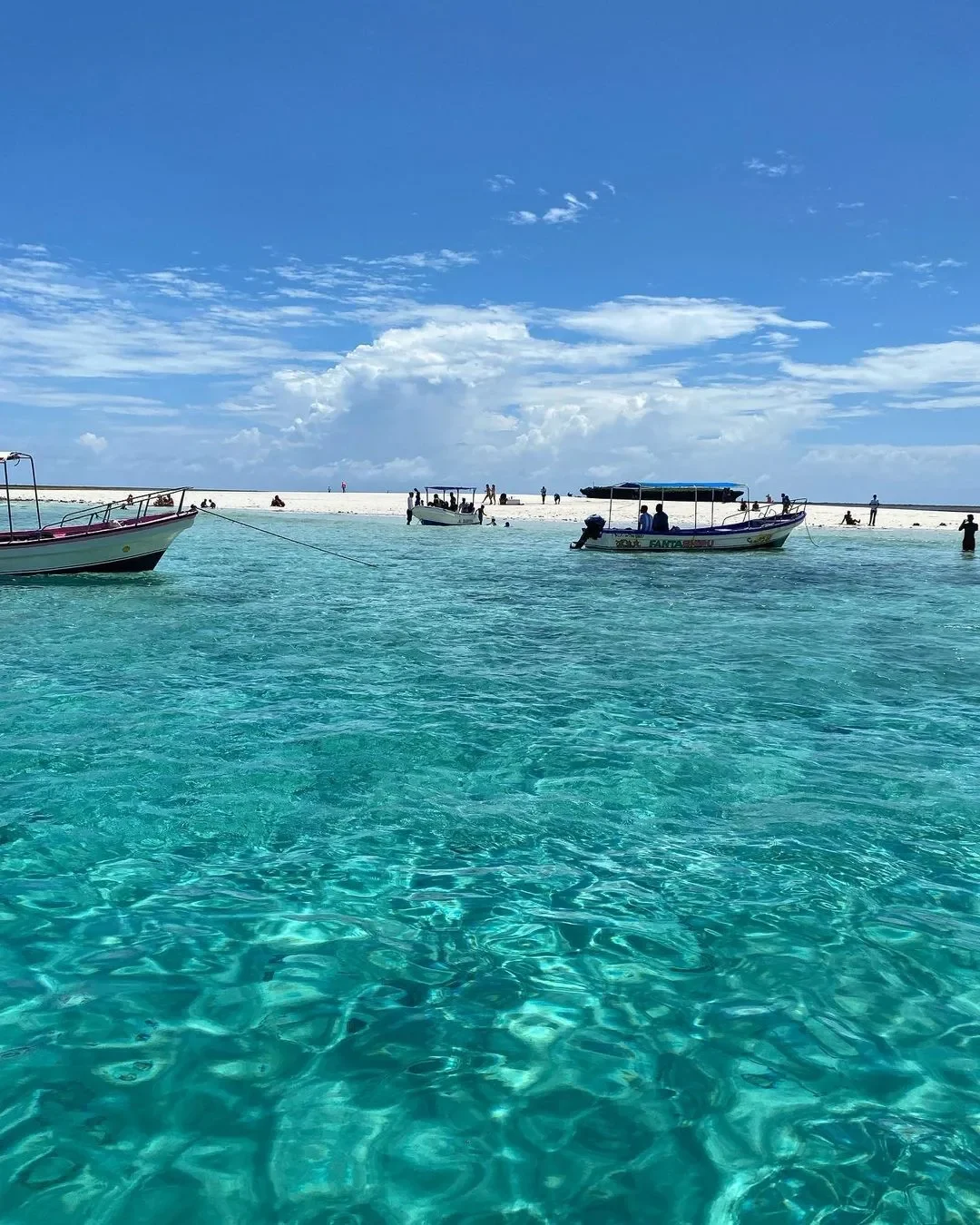
Kisite-Mpunguti Marine National Park protects coral islands and reefs off Shimoni on Kenya's south coast, near the Tanzanian border. Wikipedia lists 39 km2; Kenya Wildlife Service describes a 28 km2 no-take Kisite park and an 11 km2 Mpunguti reserve, gazetted in 1978.
Travellers sail by dhow for dolphins and snorkel the Kisite reefs, often with a Wasini Island lunch and a stop at the Shimoni caves. The park is a straightforward day trip from Diani Beach after a safari on the Kenya coast.
Our guides are adding their own photos of Kisite-Mpunguti Marine National Park. They appear here as soon as they are uploaded.
Shallow reefs around Kisite Island hold tropical fish, rays and hard coral gardens.
A car-free island near Shimoni with coral-rag buildings and mangrove boardwalks.
Historic coral caves in Shimoni village linked to the Indian Ocean slave trade era.
KWS brands the park as home of the dolphins, with regular wild dolphin encounters.
Bottlenose and humpback dolphins use the channel and park waters around the islands.
Wikipedia lists parrotfish, angelfish, butterflyfish, groupers, wrasses and more.
KWS highlights turtle habitat, including Kijamba cha Kasa, as a park attraction.
Site season notes place humpback whales offshore in the cooler mid-year months.
KWS lists the marine park as an Important Bird Area for coastal species.
Moray eels, rays and other reef animals share the coral gardens with schooling fish.
Four small islands sit inside a fringing reef system near the Tanzanian border.
Kisite Marine National Park (28 km2) is fully protected; Mpunguti Reserve allows limited fishing.
Wasini and nearby shores hold mangrove stands reached by boardwalk in places.
Boats cross from Shimoni jetty through the Wasini Channel to the outer reefs.
October to March for calm seas and clear water for snorkelling
Months October to March
What to expect Warm, clearer water suited to snorkelling and diving.
Best for Reef trips and dolphin watching
Crowds and prices Busiest months
Months April to May
What to expect Rain showers and rougher channel crossings.
Best for Quieter Wasini visits
Crowds and prices Quietest months
Months June to September
What to expect Windier seas; whale sightings possible offshore.
Best for Boat trips in settled windows
Crowds and prices Fewer visitors
We add Kisite-Mpunguti Marine National Park to private trips. These Kenya packages are a good base, and we adjust the days to include it.
Every price is per person in US dollars, from the base price.
Sail from Shimoni on a traditional dhow while watching for wild dolphins.
Swim over shallow coral gardens around Kisite Island in clear season.
Many day trips include a Swahili lunch on Wasini after the reef stop.
Walk the community-managed Shimoni caves with a local guide.
How Road
Time 1 to 1.5 hours
Distance 50 km
Good to know South to Shimoni jetty for dhow departures
How Road
Time 2 to 2.5 hours
Good to know Via Likoni and the south coast road to Shimoni
How Air
Time Scheduled flight
Good to know Fly to Ukunda (Diani), then road transfer to Shimoni
How Boat
Good to know Dhow or boat across the channel to Kisite reefs and Wasini
Most visitors sleep at Diani Beach resorts and visit Kisite as a full day outing.
KWS lists Shimoni Cottages among Mbugani-linked stays near the jetty.
Larger beach resorts toward Diani and Mombasa run or book park day trips.
We book the lodge or camp that fits your budget when we plan your trip to Kisite-Mpunguti Marine National Park.
One full day from Diani or Shimoni covers the dhow, reef and Wasini lunch. Divers or guests who want a quieter night on the south coast may add a night in Shimoni. Most safari travellers keep Kisite as a single coastal day inside a longer Diani stay.
The park sits on the far south coast, so it pairs with beach and reef stops rather than inland parks on the same day.
Kisite suits travellers who want a classic Kenyan dhow day with snorkelling and dolphin watching. It is gentle enough for many families when seas are calm. Guests who dislike boats or rough water should choose the October to March window or skip the outer reef crossing.
KWS dates establishment to 1973 and gazettement to 1978 for this Shimoni to Vanga seascape. Kisite is a fully protected no-take park; Mpunguti Reserve allows controlled artisanal fishing. Wikipedia notes a gold-level Blue Park Award in December 2021 for science-based protection standards.
The park and reserve lie off Kenya's south coast near Shimoni and Wasini Island in Kwale County, close to the Tanzanian border. Kenya Wildlife Service manages a 28 km² no-take park at Kisite and an 11 km² reserve at Mpunguti, 39 km² in total.
Yes. Indo-Pacific bottlenose and humpback dolphins use the area and are a main reason for dhow trips from Shimoni. Sightings are common but never guaranteed, because the animals move freely through the channel and reefs.
KWS states the marine protected area was established in 1973 and gazetted in 1978. Wikipedia also notes 1978 as the establishment year for the park and calls it Kenya's first Blue Park. It is managed by Kenya Wildlife Service.
Drive south to Shimoni Jetty in about 1 to 1.5 hours, then take a motorised dhow or boat for roughly 15 to 20 minutes into the park. Flights into Ukunda Airport shorten the Nairobi connection before the road transfer.
Day trips usually combine a dhow sailing, dolphin watching and snorkelling on coral gardens around Kisite Island. Reef fish such as parrotfish, angelfish and butterflyfish are commonly listed, and turtles use the area. Visibility is strongest in the calm October to March season.
October to March usually brings calmer seas and clearer water for snorkelling. July to September is cooler and windier, with a chance of humpback whales offshore. April to June is wetter and often choppier.
Drive about 50 km (31 mi) south to Shimoni, usually one to one and a half hours, then board a dhow or boat for the reef. From Nairobi, fly to Ukunda airstrip at Diani and continue by road. Mombasa transfers take roughly two to two and a half hours by road.
Kenya Wildlife Service lists non-resident entry at US$25 for an adult and US$15 for a child. We checked this rate on 26 November 2026. Boat hire and lunch on Wasini are charged separately by operators.
Yes for confident young swimmers on calm days, with life jackets and close supervision on the dhow. Choose the clearer months from October to March, and skip rough-sea days during the long rains.
Yes. Many guests stay on the dhow for dolphin watching and views of the islands. Snorkelling is optional. If you cannot swim, wear a life jacket, stay with the crew and skip in-water time rather than forcing a reef entry.
Three recent reviews from SafariBookings. The score covers all 19.
Read SafariBookings Reviews5/5
An unforgettable safari experience in Kenya!
I had an amazing experience with Sun Summit & Safaris! I booked a 5-day safari visiting the Masai Mara and Lake Nakuru, and it was definitely one of the highlights of my travels. The itinerary was well planned and offere...
Yamila · United Kingdom · Oct 25, 2026
5/5
Incredible 9-Day Kenya Safari with Sun Summit & Safaris
We just returned from an unforgettable 10-day safari through Kenya with Sun Summit & Safaris, and we can't recommend them highly enough. From our very first exchange, Diana was outstanding to work with. She was incredibl...
Vishak Seshadri · United States · Aug 31, 2026
5/5
Safari Bookings provided a truly exceptional white-glove experience for my family. From our initial conversation, they provided expert guidance that perfectly matched our budget. Their custom recommendations for our enti...
Francis Kayiwa · United States · Apr 7, 2026
Tell us your dates and group size. We reply within 24 hours with a priced plan in US dollars.